The 10 Documents Behind every Export Shipment from New Zealand
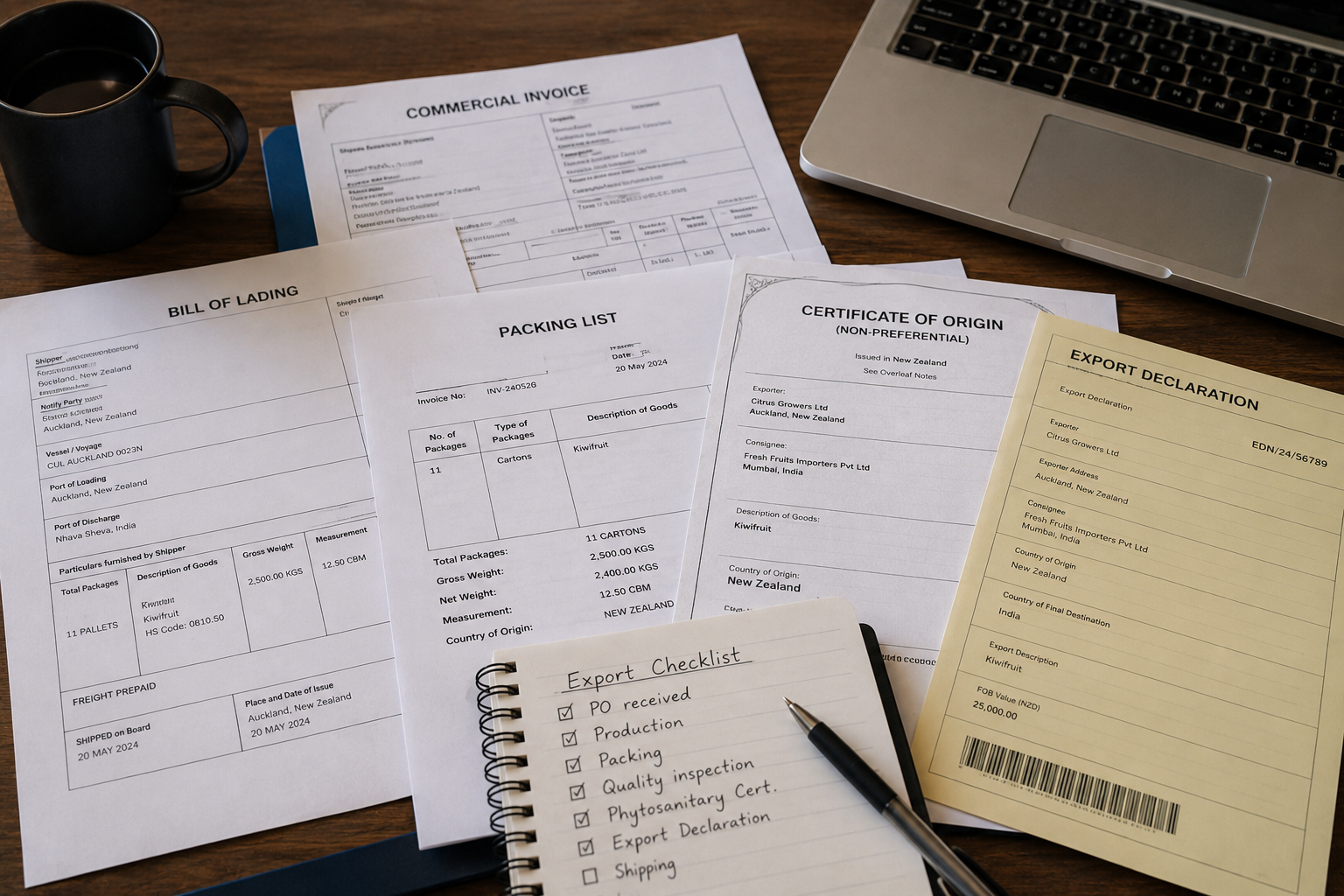
Exporting can feel complex from the outside, but once businesses understand the process and have the right people around them, it becomes far more manageable.
When most people think about exporting, they picture containers, ships and overseas customers.
What they often don’t see is the documentation sitting behind every shipment.
I deal with this regularly when funding customers, and I can understand why it looks overwhelming at first. Purchase orders, commercial invoices, packing lists, Bills of Lading, certificates of origin, insurance documents, inspection reports there can be a lot going on.
But the good news is that plenty of NZ SMEs are already doing this successfully every day.
It Usually Starts With A Purchase Order
Most export transactions start with a purchase order from the overseas customer.
That purchase order confirms what the buyer wants, the quantity, pricing, delivery terms and payment expectations.
For a growing SME, receiving an export order can be exciting. It means the product has demand overseas and the business has a real opportunity to grow.
But the purchase order itself doesn’t create cashflow.
The business still needs to produce, source, package and ship the goods before payment is received.
That’s where many exporters start feeling the pressure.
The Core Export Documents
Once the order is underway, the key documents start coming together.
The commercial invoice is the formal invoice to the customer.
The packing list confirms what is actually inside the shipment.
The Bill of Lading is issued once the goods are loaded for shipping and acts as proof that the goods have left New Zealand.
Depending on the product and country, there may also be a certificate of origin, insurance documents, quality inspection reports, health certificates or phytosanitary certificates.
It sounds like a lot, but most experienced exporters, freight forwarders and funders deal with these documents all the time.
For many SMEs, the key is not trying to understand everything perfectly on day one. It’s knowing which documents matter, who helps prepare them and how they fit into the payment process.
Why The Bill Of Lading Matters
In export finance, the Bill of Lading is one of the most important documents.
It confirms that the goods have been loaded and shipped.
When I’m looking at funding export transactions, this is often a key milestone because it shows the exporter has done their part and the goods are on the way to the overseas buyer.
For many businesses, this is also the point where cashflow support becomes important.
The goods have left New Zealand, but payment may still be weeks away.
The Cashflow Gap
This is the part many new exporters underestimate.
A business can receive a purchase order, produce the goods, ship the product and still not get paid until much later.
The goods may spend weeks on the water. Once they arrive, there can be customs clearance, quality checks, inspection processes and final confirmation before payment is released.
That timing gap can put pressure on SMEs, especially when they are trying to fund the next order at the same time.
This is something I see regularly.
The business has the demand. The customer wants the product. The export opportunity is real.
But the cash is tied up in the shipment.
Exporting Is Achievable For NZ SMEs
The positive side is that this is completely manageable with the right structure.
I work with plenty of SMEs that have made exporting work, even when the process looked intimidating at the start.
They usually succeed because they have good support around them: freight forwarders, accountants, insurers, funders and experienced people who understand the export process.
The paperwork may look complicated, but each document has a purpose.
Once the business understands the flow, it becomes much easier to manage.
Where Funding Can Help
For many exporters, funding is not about fixing a bad business.
It’s about helping a good business manage timing.
At Pacific Invoice Finance New Zealand, we can look at funding export transactions once the right documents are in place, particularly around the invoice, Bill of Lading and, where required, trade credit insurance.
That can help businesses access working capital earlier rather than waiting weeks for overseas payment.
For SMEs trying to grow, that can make a real difference.
It can help them fund the next purchase order, keep stock moving and continue taking opportunities without cashflow becoming the bottleneck.
Final Thought
Exporting can look overwhelming from the outside.
But I see NZ SMEs doing it successfully all the time.
The key is understanding the process, getting the right support and making sure the funding structure matches the way international trade actually works.
The paperwork matters.
But it shouldn’t stop good businesses from taking export opportunities.
If You Want to Talk It Through
If you want a quick idea of what this could look like for your business, I’m happy to run through it with you.
Or learn more: