7 Reasons Banks say no to a Business Overdraft
Receiving a "no" from your bank can be incredibly frustrating, especially when you've been trading successfully for years.
Many business owners assume a declined overdraft means their business isn't financially healthy. In reality, that's often not the case.
Banks assess lending using strict credit policies, security requirements and risk appetite. Sometimes a business simply doesn't fit those requirements, even if it's profitable and growing.
Over the years, I've spoken with many New Zealand business owners who have found themselves in this position.
If your business overdraft application has been declined, here's what may have happened and what your options are.
Why do banks decline Business Overdraft Applications?
For many small and medium-sized businesses, banks often look for security when assessing an overdraft application. This may include equity in a residential or commercial property, which provides the bank with additional comfort if the business is unable to repay the debt.
While a business may have cash in the bank, equipment or other assets, these don't always provide the same level of security. If a business experiences financial difficulty, those assets can reduce in value or be claimed by other creditors, making them less reliable from a lender's perspective.
This doesn't necessarily mean your business isn't performing well. It simply means the bank's security requirements or risk appetite may not align with your current circumstances.
2. Cash Flow doesn't meet Lending Criteria
Ironically, businesses often apply for overdrafts because cash flow is tight. Banks may view inconsistent cash flow as increasing lending risk, even if the underlying business remains profitable. Lenders with look at forecasted cashflow to ensure you can service the principle and interest of the loan at a higher margin.
Growing businesses often experience this when revenue is increasing but cash hasn't yet caught up.
3. Existing debt levels
Banks assess total debt, not just the new facility being requested.
If a business already has equipment finance, property lending or other facilities, they may decide additional borrowing isn't appropriate. This ties into cashflow too, because the more debt you have the more monthly repayments that are going out and the less cashflow you have to service the new request.
4. Industry Risk
Every lender has industries they are more or less comfortable funding and it’s really hard to identify which lender doesn’t like what industry because it’s always changing.
Construction, recruitment, transport, hospitality and export businesses can sometimes require specialist funding because their cash flow cycles differ from many traditional businesses.
5. Limited trading history
Newer businesses often have fewer financial statements available.
Even if future prospects look excellent and security is available lenders may require more trading history before approving an overdraft.
6. Profit doesn't always equal cash
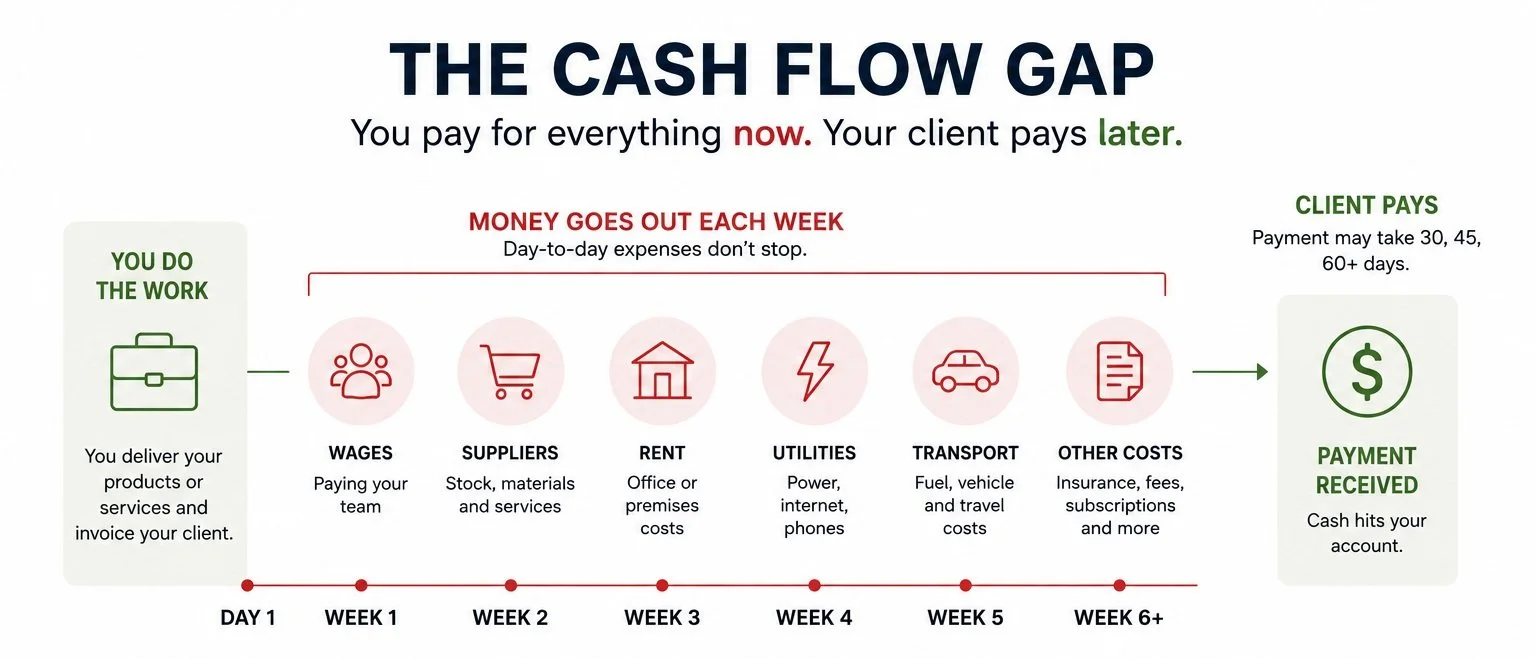
This is one of the biggest misconceptions. A business can be profitable on paper while still experiencing cash flow pressure.
Imagine you invoice $500,000 this month. If customers don't pay for another 45 days, you still need to pay:
Staff wages
Suppliers
Rent
GST
ACC
Insurance
Software subscriptions
7. Bank lending policies change
Sometimes nothing has changed within your business. Instead, lending policies evolve.
Banks regularly review:
Industry exposure
Risk appetite
Economic conditions
Capital requirements
A facility that may have been approved several years ago might be assessed differently today.
A declined Overdraft doesn't mean your Business is Failing
This is an important distinction. I've spoken with businesses that were:
Growing rapidly
Winning new contracts
Increasing revenue
Employing more staff
Yet cash flow became tighter because they were waiting weeks or even months for customers to pay.
The business wasn't failing. It simply needed working capital.
What Are Your Alternatives?
Invoice Finance
If your business invoices other businesses on payment terms, invoice finance may allow you to access funds tied up in unpaid invoices rather than waiting 30, 45 or 60 days for payment.
For businesses with strong customers but growing cash flow demands, this can provide working capital that moves in line with sales.
Asset Finance
Businesses purchasing vehicles, equipment or machinery may benefit from dedicated asset finance rather than increasing an overdraft.
Trade or Import Finance
Importers often require funding before goods are sold. Specialist trade finance solutions can help bridge this gap.
Equity Investment
Some businesses may choose to bring in investors or additional shareholders rather than increasing debt.
When Does Invoice Finance Make Sense?
Invoice finance is often worth exploring if your business:
Has business customers on credit terms
Is growing quickly
Waits 30–90 days to be paid
Has strong sales but cash flow pressure
Wants funding that grows alongside turnover
If You Want to Talk It Through
If you want a quick idea of what this could look like for your business, I’m happy to run through it with you.
Or learn more: