Invoice Finance vs Overdraft for Recruitment Businesses: Which Is Better?

Growing a recruitment business is exciting. Landing a new client. Placing another contractor. Winning a national agreement.
But there's one problem almost every successful recruitment business eventually encounters, Cash flow.
In my experience working with recruitment businesses across New Zealand and internationally, I've found that the faster a recruitment agency grows, the more pressure it often puts on working capital.
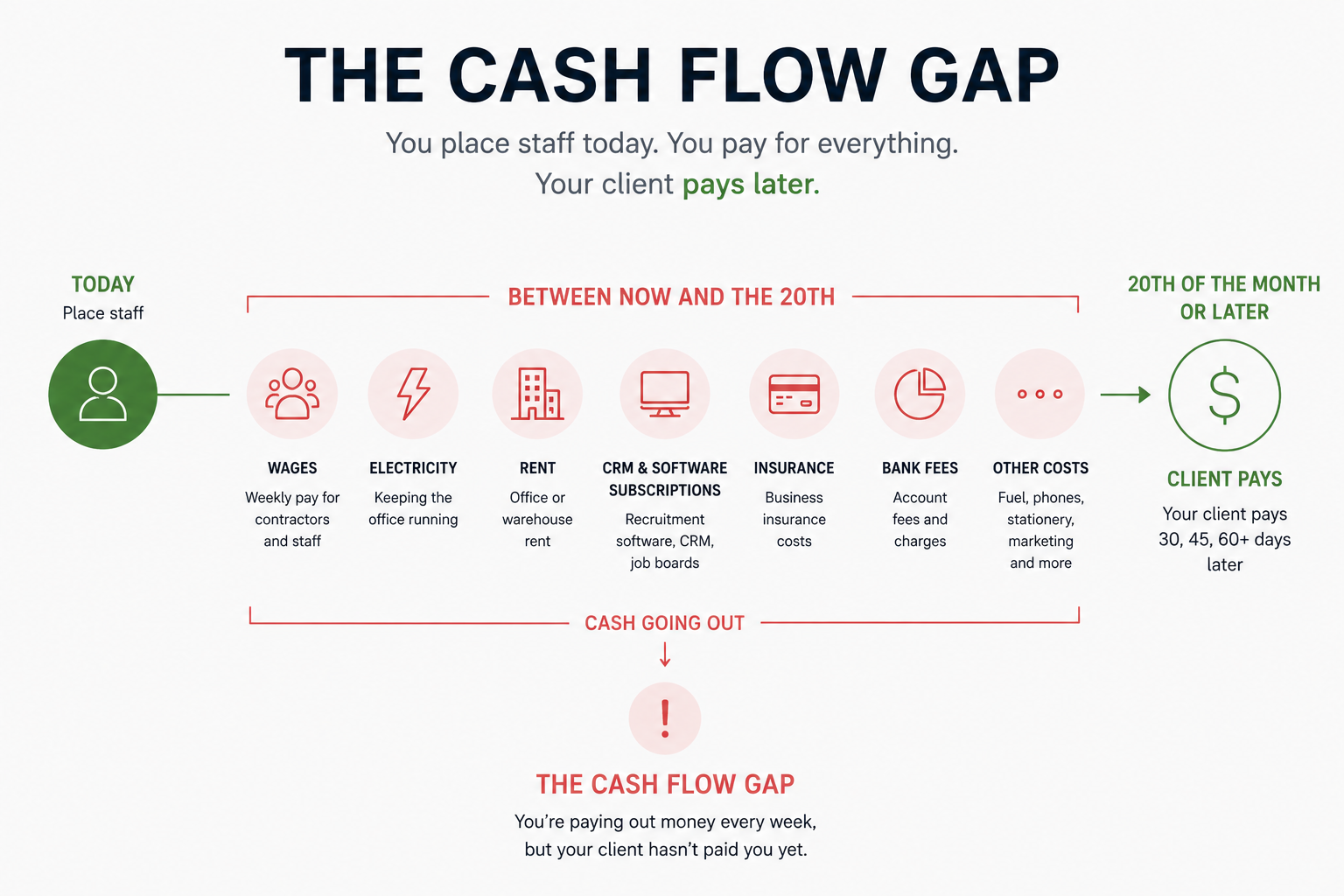
That's because recruitment businesses usually pay people well before they receive payment from their clients.
Whether you're supplying temporary labour, healthcare professionals or specialist contractors overseas, growth can quickly become expensive.
Why Recruitment Businesses Experience Cash Flow Pressure
Unlike many industries, recruitment agencies don't simply invoice and wait.
They often need to fund weekly wages, PAYE, holiday pay, ACC, KiwiSaver, payroll administration while waiting 30, 45 or even 60 days for clients to settle invoices.
Ironically, one of the biggest risks isn't losing clients. It's winning too many and then getting stuck with long payment terms whilst paying staff weekly.
I've seen recruitment businesses become more profitable on paper while simultaneously running out of available cash because payroll continued growing faster than customer payments arrived.
Every Recruitment business is different
One thing I've learnt is that "recruitment" covers a huge range of businesses.
Some of the recruitment companies I've worked and spoken with include:
Immigration & Labour Recruitment
One business specialised in sourcing overseas workers for New Zealand's healthcare sector. They recruited staff for medical providers and retirement villages, helping fill roles that are often difficult to source locally.
Like many recruitment businesses, payroll and placement costs occurred well before client invoices were paid.
Professional Recruitment across Asia
Another recruitment business supplied highly skilled professionals including doctors and lawyers into major commercial centres throughout Asia and Middle East.
Although the roles were very different, the challenge was exactly the same. Large invoices and long payment terms with significant working capital tied up while waiting for payment.
Other Recruitment Businesses I've Spoken With
Over the years I've also had conversations with agencies specialising in:
Labour hire
Temporary staffing
Drainlayers
Engineers
Carpenters
Construction labour
Industrial staffing
As I just touched on, the industries change but the cash flow challenge usually doesn't.
How An Overdraft Works
An overdraft gives your business access to a revolving credit facility attached to your bank account.
Advantages include, Flexible access to funds, useful for unexpected expenses and Interest only paid on the amount used. However, overdrafts are usually limited by what property you have available for security, business assets, historic financial performance
As recruitment businesses grow, payroll often increases much faster than the overdraft limit and requesting increases in overdrafts from month to month will slow growth down and there will be a point in which the bank cannot increase further due to the security available.
How Invoice Finance Works
Invoice finance works differently. Rather than increasing debt based primarily on security, funding is linked to your sales ledger. As your invoices increase, your available funding generally increases as well. We just ask for an understanding of the new contract or new placements settled and grow your facility alongside your business.
For recruitment businesses experiencing rapid growth, this can provide significantly greater flexibility than a fixed overdraft. Instead of waiting for customers to pay 30–60 days later, eligible businesses can access up to 80% of the invoice value shortly after it is raised.
That cash can then be used to fund weekly payroll, PAYE obligations, holiday pay, superannuation and KiwiSaver, sdditional recruitment and general business growth.
So which is better for Recruitment Businesses you ask?
Well it’s probably not what you want to hear sorry, but there isn't a perfect answer. Some recruitment businesses successfully use an overdraft to cover cashflow strains, some use a mix of both. An overdraft may help cover occasional expenses but if working capital is tight and payment terms cannot be speed up Invoice Finance is a better long term solution.
For businesses growing quickly, having funding that grows alongside turnover can remove one of the biggest barriers to expansion.
What We Usually Want To Understand
Every recruitment business is different, but when I first speak with an agency I'm generally trying to understand:
Who are your customers?
Are invoices paid weekly, fortnightly or monthly?
What payment terms do your clients operate on?
How many contractors or employees are you funding?
Are invoices raised after timesheets are approved?
Is the business growing?
What does the customer spread look like?
Are there any concentration risks?
The goal isn't simply providing finance for you. It's understanding how cash moves through the business and how we can best support you as you grow throughout the year.
If You Want to Talk It Through
If you want a quick idea of what this could look like for your business, I’m happy to run through it with you.
Or learn more: