Working Capital Solutions For Manufacturers
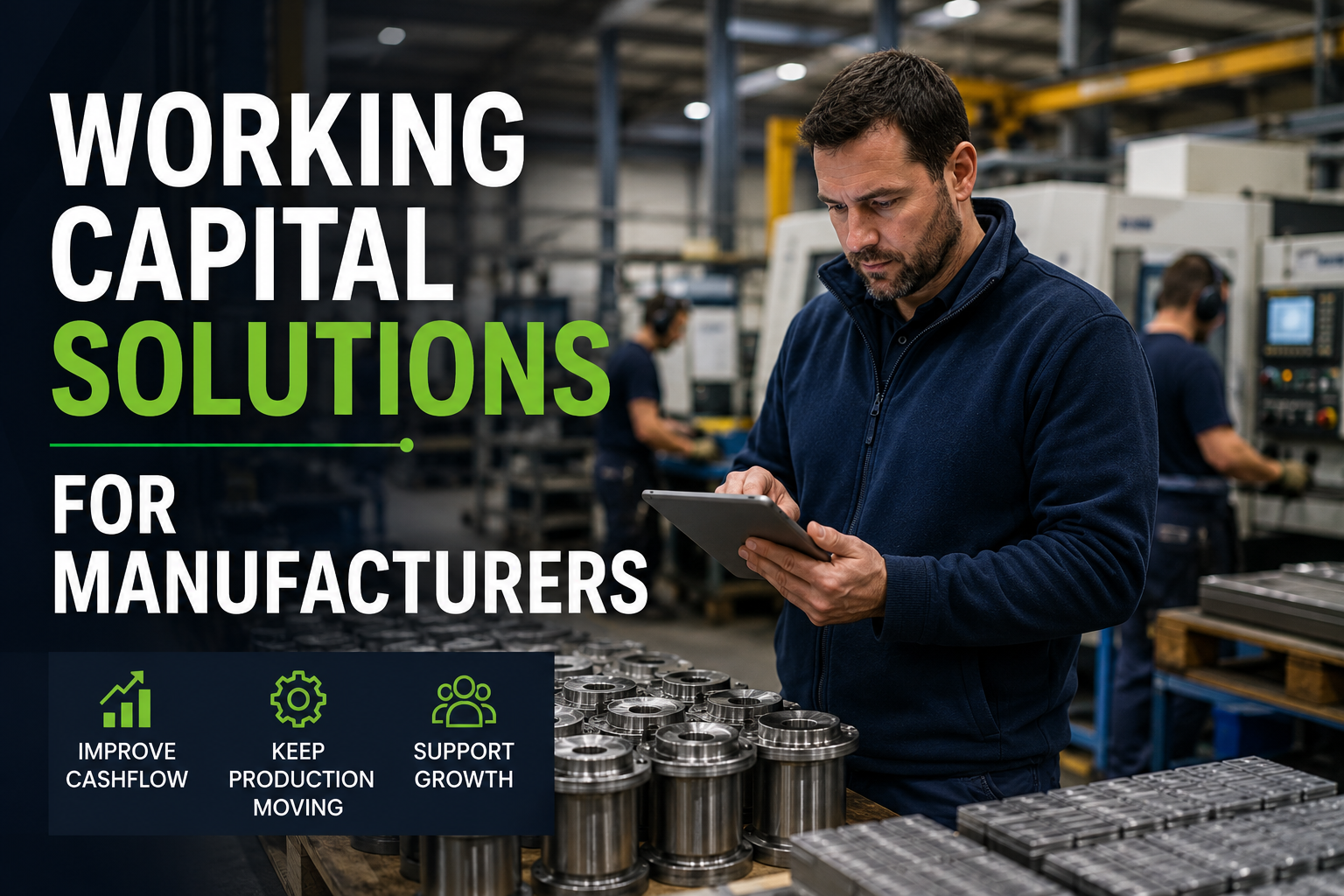
One of the most common challenges I see manufacturers face isn't a lack of demand, it's a lack of cashflow and many manufacturing businesses can be profitable on paper while still feeling pressure on their bank account.
The reason is simple.
Manufacturers often need to spend money long before they get paid. Raw materials need to be purchased, staff need to be paid and production needs to continue.
Then the finished product is delivered, invoiced and payment may not arrive for another 30, 60 or even 90 days. For growing manufacturers, that timing gap can create significant pressure on working capital.
Why Manufacturing Is Cashflow Intensive
Manufacturing businesses often have cash tied up in multiple places at once. Money may be invested in:
Raw materials/Stock
Work in progress
Finished goods inventory
Debtors awaiting payment
Meanwhile, suppliers, wages, GST and other operating costs continue regardless of when customers pay. A manufacturer may have a full order book and strong sales pipeline but still struggle with day-to-day cashflow.
It's one of the reasons working capital funding is so important within the manufacturing sector.
What Is Working Capital?
Working capital is the money available to fund a business's day-to-day operations. In simple terms, it helps bridge the gap between spending money and receiving money.
For manufacturers, working capital can help fund:
Raw material purchases
Production costs
Payroll
Inventory requirements
Customer payment terms
Without sufficient working capital, growth can actually become a problem. The more orders a business receives, the more cash it may need to fund production.
Common Working Capital Solutions For Manufacturers
There is no single funding solution that suits every manufacturing business.
The right option often depends on the business's size, trading history, customer base and growth plans.
Bank Overdrafts
For many businesses, the first conversation is with their bank. An overdraft provides access to additional cash when required and can be a flexible funding solution for day-to-day cashflow fluctuations.
Banks are often the first and most cost-effective source of funding when a business meets their lending criteria. However, overdrafts are generally fixed facilities and may not always grow at the same pace as sales and they rely heavily on your profitability, asset value they can use as security or collateral and forecasted turnover.
Trade Finance
Trade finance can assist manufacturers that need to purchase stock or raw materials before production begins. This type of funding can help bridge the gap between supplier payments and customer receipts.
For businesses experiencing growth or taking on larger orders, trade finance can provide additional flexibility without immediately impacting cash reserves. It’s one of the cheapest options and removes document heavy transactions but appetite is low for banks. You need to be larger with turnover of $1.5mill or more and trading for longer than 12 months. They will also want to see good strong relationships with your customers and past transactions with them.
Invoice Finance
One of the most effective working capital solutions for many manufacturers is Invoice Finance. Rather than waiting 30, 60 or 90 days for customers to pay, businesses can access funding against their outstanding invoices.
As sales increase, the available funding often increases as well. This is one of the reasons invoice finance can work particularly well for growing manufacturers.
Unlike an overdraft, which typically has a fixed limit, invoice finance generally grows alongside receivables. For businesses with strong customers and long payment terms, this can significantly improve cashflow.
They don’t need personal property as security and they can work with past unprofitable performance and bad credit.
Managing Growth
One of the biggest misconceptions in business is that growth automatically improves cashflow. In reality, rapid growth can place additional pressure on working capital.
More sales often mean more stock, more materials, more labour, more production costs all before payment is received. This is where having the right funding structure can make a significant difference.
Rather than turning down orders or delaying growth plans, businesses may be able to use working capital facilities to support expansion.
If You Want to Talk It Through
If you want a quick idea of what this could look like for your business, I’m happy to run through it with you.
Or learn more: