US Demand for NZ Beef is surging. Can your Business fund the Opportunity?
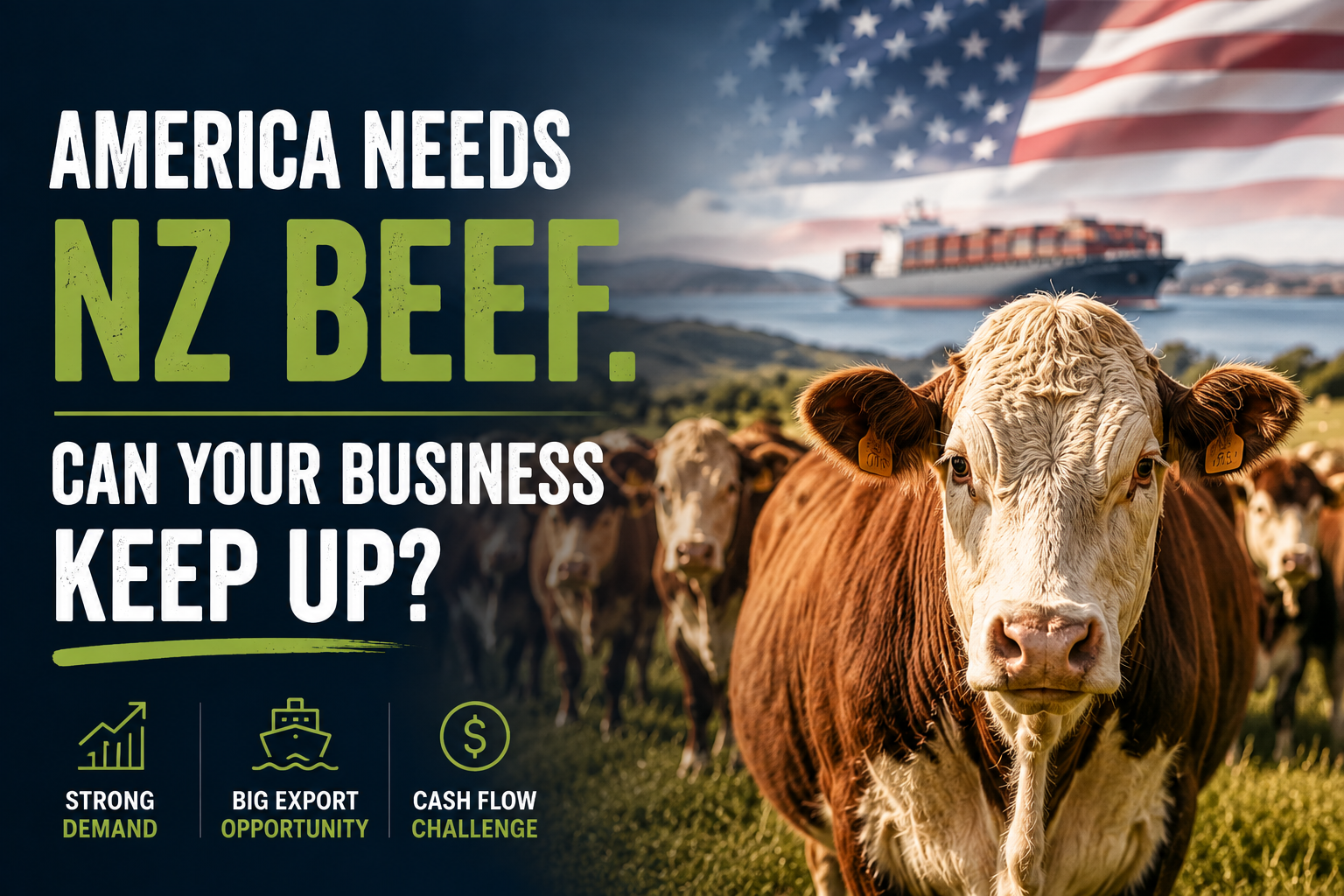
Whilst researching why beef is so expensive in New Zealand, I stumbled across something I hadn't really thought about before.
The United States is experiencing one of its smallest cattle herds in decades. At first I didn't think much of it. That's America's problem, right?
Well, not exactly.
New Zealand beef is sold into a global market, and when one of the world's biggest consumers of beef suddenly needs more imported product, demand for New Zealand exports naturally increases.
For our exporters, that's a fantastic opportunity. But it's also where I see one of the biggest cash flow challenges.
This is the most important point!
Winning a large export order is exciting. The difficult part is funding it.
You've got to purchase livestock, process it, package it, organise freight, ship it overseas and then, in many cases, wait 30, 60 or even 90 days before payment arrives.
Growth is great. Growth without enough working capital can quickly become stressful.
It's something I see quite regularly. Businesses don't necessarily struggle because they lack customers. They struggle because they're trying to fund larger orders while waiting to get paid for the previous ones and that's where export finance and invoice finance can make a real difference.
Rather than waiting for overseas customers to pay, businesses can unlock cash tied up in export invoices or Bills of Lading, helping them continue purchasing stock, paying suppliers and taking on additional orders.
The current demand from the United States won't last forever. Global markets constantly change.
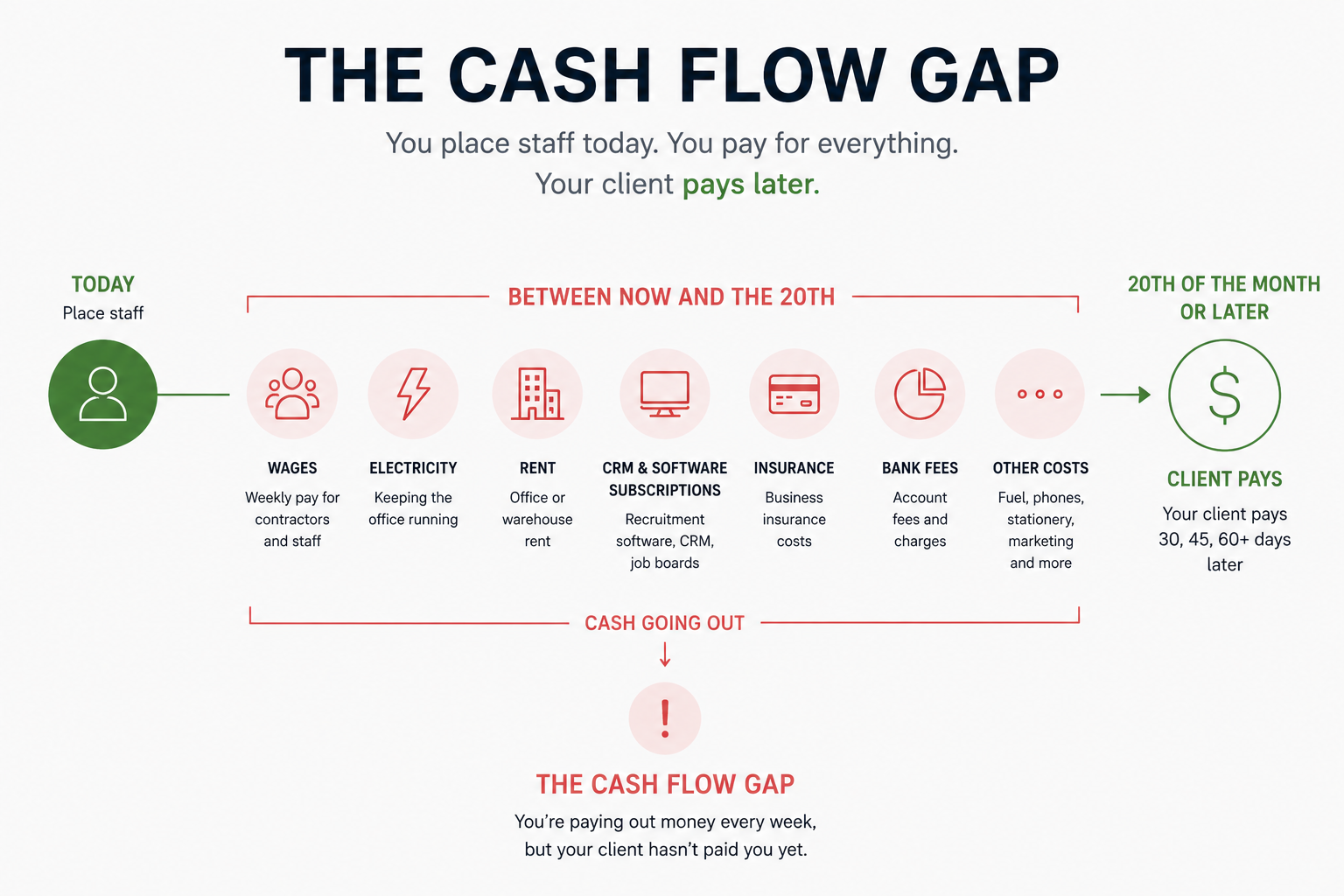
Growth doesn't always improve Cashflow
One of the biggest misconceptions I come across is that more sales automatically mean more cash in the bank.
In reality, growth often has the opposite effect.
Imagine receiving an export order that's twice the size of anything you've shipped before. Before you receive a single dollar, you've already purchased more livestock, processed more product, paid more wages, organised freight and covered the costs of getting that shipment onto the water.
Only then does the waiting begin.
Depending on your customer and payment terms, it could be another 30, 60 or even 90 days before the money lands in your account.
I've seen businesses with more work than they've ever had, yet they're under more financial pressure than they were the year before. Not because they're making bad decisions, but because every dollar they've got is tied up producing the next shipment.
They're not short of demand.
They're short of working capital.
Preparing before the Opportunity arrives
The exporters who tend to make the most of opportunities like this aren't usually the ones trying to organise funding after they've won the order.
They're the ones who've already planned for growth.
Whether that's export finance, invoice finance or another working capital solution, having funding in place means businesses can continue purchasing stock, paying suppliers and accepting larger orders without constantly worrying about cash flow.
The confidence that comes from knowing you've got the funding to support growth can be just as valuable as winning the order itself.
Every opportunity has a Window
Global markets are constantly changing.
Today's opportunity might be driven by lower US cattle numbers. Tomorrow it could be exchange rates, trade agreements or changing consumer demand.
The businesses that consistently take advantage of these opportunities are often the ones that are financially prepared before demand arrives, rather than trying to catch up once it's already here.
If you're exporting to the United States, or looking to expand into overseas markets, I'd be interested to hear what you're seeing.
If You Want to Talk It Through
If you want a quick idea of what this could look like for your business, I’m happy to run through it with you.
Or learn more: