Funding Growth For Wholesalers
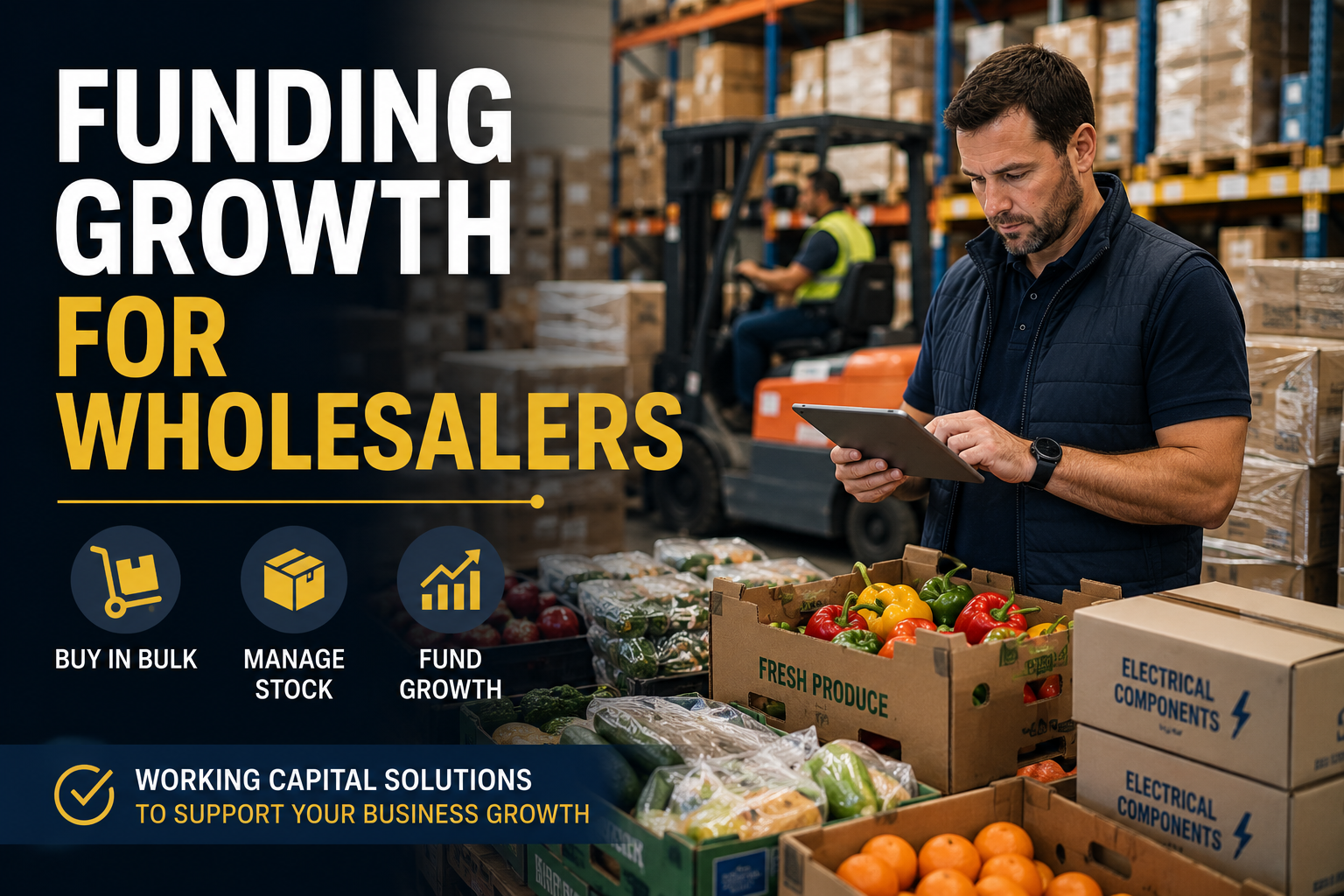
One thing I've noticed working with wholesalers over the years is that most don't have a sales problem. If anything, they usually have the opposite problem. Demand is there, customers are ordering and opportunities are coming through. The challenge is finding enough cashflow to keep up.
I've worked with food wholesalers, fruit and vegetable wholesalers, electrical component suppliers and importers. While the products are all different, the cashflow challenge is usually the same. They buy stock in bulk, hold inventory and then sell it out across multiple customers, often on payment terms.
The Cashflow Gap Nobody Talks About
On paper, a wholesaler can be doing really well. In reality though, a lot of cash is tied up before a dollar comes back in.
Take a fruit and vegetable wholesaler as an example. They may need to purchase large volumes of stock upfront, organise freight, pay staff and cover operating costs before selling those products across dozens of customers. Some customers pay on time. Some take longer. Some need chasing. Meanwhile the next shipment is already on its way.
The same applies to electrical wholesalers. Stock may sit on shelves for weeks or months before being sold. Once it is sold, customers might still receive 30 or 60-day terms. That's a long time for cash to be tied up.
Why Growth Can Make Things Harder
Many business owners assume that if revenue is increasing, cashflow should improve as well. Unfortunately, that's not always how it works. More sales often mean more inventory, more supplier payments, more freight costs, more debtors
The business can be growing strongly while the bank account is moving in the opposite direction.
I've seen wholesalers secure large new customers and quickly discover their existing facilities aren't enough to support the growth. The opportunity is there, but the working capital isn't.
Importing Adds Another Layer
It gets even harder when products are being imported. I've seen wholesalers pay suppliers overseas, wait for production, wait for shipping and then wait again for customers to pay once the goods have been delivered.
The entire cycle can stretch out over several months. The stock may be sold before the cash has fully returned to the business.
Where Funding Can Help
For many businesses, the first conversation is with their bank.
Overdrafts can be a useful solution for managing short-term cashflow requirements and are often the cheapest form of funding available. The challenge is that overdrafts don't always grow at the same pace as the business.
Trade finance can help where businesses need to purchase stock before it's sold. This can be particularly useful for importers and wholesalers carrying large inventory positions.
Another option is invoice finance.
By the time many wholesalers speak with us, they've already done the hard part. They've bought the stock, sold it and issued the invoice. The problem is they're now waiting another 30, 60 or 90 days to get paid while trying to fund the next round of orders.
The Best Wholesalers Understand Their Cashflow
What I've found is that most successful wholesalers become very good at understanding their cashflow cycle.
They know:
How much stock they need
How quickly inventory turns
Which customers pay well
Which customers don't
How much working capital growth requires
Funding isn't always about fixing a problem. In many cases it's about helping a good business continue doing what it's already doing well.
If You Want to Talk It Through
If you want a quick idea of what this could look like for your business, I’m happy to run through it with you.
Or learn more: