What Is A Bill Of Lading And Why Does It Matter?
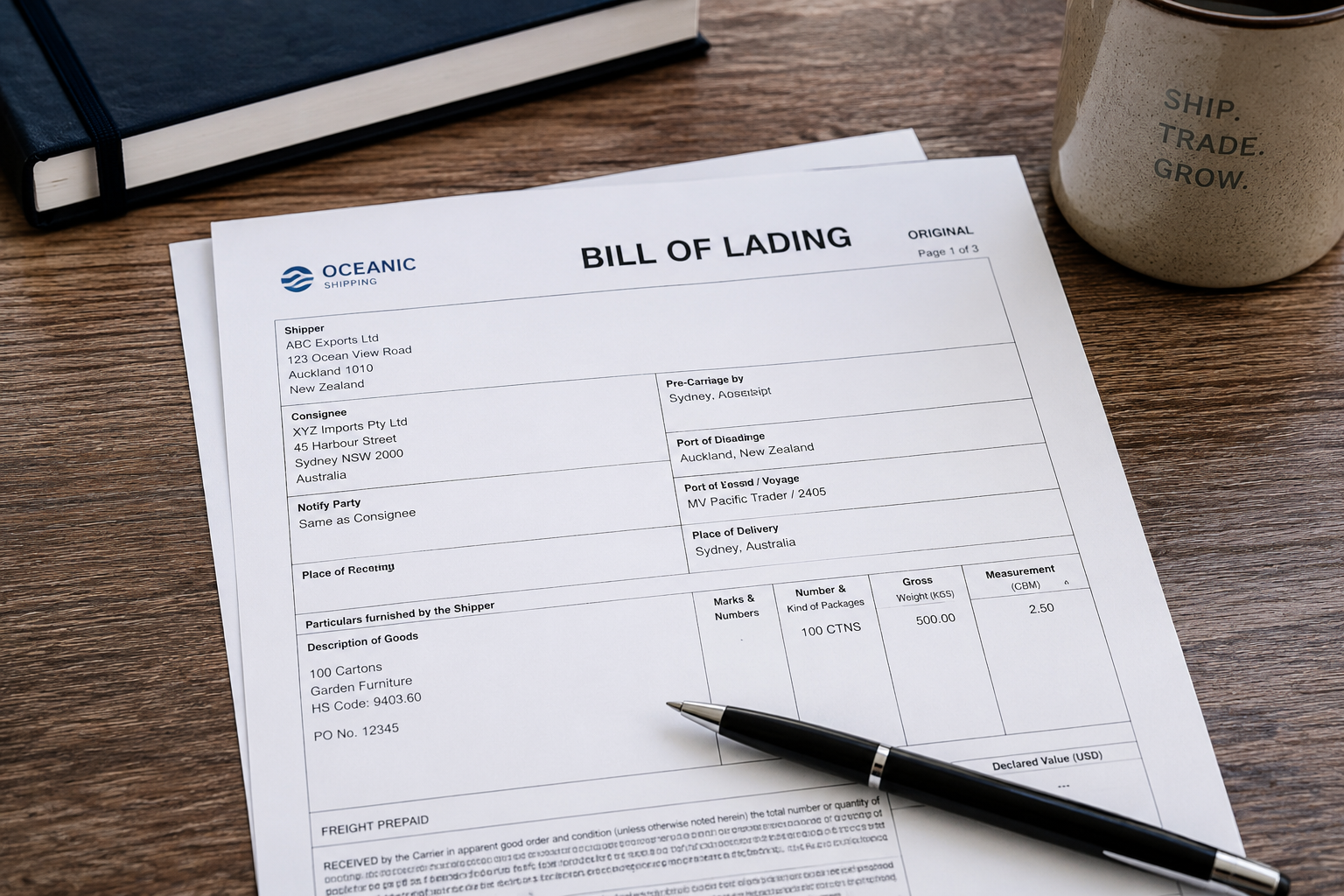
One of the most common documents I come across when dealing with exporters is the Bill of Lading. It’s one of those documents that many business owners have heard of, but not everyone fully understands why it matters.
The reality is that a Bill of Lading sits right in the middle of many export transactions. Freight companies use it, importers use it, banks rely on it and funders often pay close attention to it as well. If you’re exporting products from New Zealand, understanding what a Bill of Lading is can help you understand how the whole export transaction flows.
What Is A Bill Of Lading?
A Bill of Lading, often referred to as a BOL, is a document issued by a shipping company once goods have been loaded onto a vessel. In simple terms, it acts as evidence that the goods have been received for shipment and are on their way to the destination country.
Think of it as one of the key documents that links the physical movement of goods with the paperwork behind the transaction. Without it, it becomes much harder to prove that a shipment has actually left New Zealand.
Why Is It Important?
From an exporter’s perspective, the Bill of Lading provides confirmation that the goods have been shipped. This is often a major milestone in the transaction because up until that point, the exporter has usually already invested money into sourcing or manufacturing the goods, packaging, freight and other operating costs.
Once the Bill of Lading is issued, the transaction starts shifting from production and shipping into payment. The goods are now moving towards the customer, but payment may still be weeks away.
Where Does It Fit In The Export Process?
A typical export transaction usually starts with a customer placing an order. The exporter then prepares or manufactures the goods, packs them, arranges freight and gets the product loaded for shipping. Once the goods are loaded, the Bill of Lading is issued.
After that, the goods travel to the destination country, the customer receives them and payment is eventually made depending on the agreed terms. It sounds simple when laid out like that, but there can often be a long delay between the goods leaving New Zealand and the cash actually landing in the exporter’s bank account.
Why Do Funders Care About It?
One thing I’ve noticed when working with exporters is that many don’t realise how important the Bill of Lading can be from a funding perspective. By the time a Bill of Lading has been issued, the exporter has usually done the hard part. The goods have been produced, the order has been fulfilled and the shipment has left New Zealand.
At that point, the challenge is often no longer production. It’s waiting for payment while trying to prepare for the next order. For export finance providers, the Bill of Lading helps show that the exporter has performed their side of the transaction and that the goods are on their way to the buyer.
Bill Of Lading vs Commercial Invoice
People sometimes confuse a Bill of Lading with a commercial invoice, but they do different jobs. A commercial invoice is the request for payment from the customer, while the Bill of Lading is evidence that the goods have been shipped.
Most export transactions require both. One supports the payment side of the transaction, while the other supports the movement of goods.
Why It Matters For Growing Exporters
One thing I’ve learnt from working with exporters is that growth can create real pressure on cashflow. A business might win an overseas customer, fulfil the order and ship the goods successfully, but still be waiting weeks to get paid.
Meanwhile, the next order might already be coming through. Before long, a growing exporter can have a lot of cash tied up in shipments that are already on the water. That is why understanding documents like the Bill of Lading matters. They sit at the centre of how export transactions are managed, funded and eventually paid.
Final Thoughts
The Bill of Lading might not be the most exciting part of exporting, but it is one of the most important documents in the process. It provides proof that goods have been shipped, helps support international trade transactions and plays a key role in turning a shipment into revenue.
For exporters, it is more than just paperwork. It is one of the documents that connects the purchase order, shipment, funding and payment process together.
If You Want to Talk It Through
If you want a quick idea of what this could look like for your business, I’m happy to run through it with you.
Or learn more: