The Bank said ‘NO’ to my Business Overdraft.
Your overdraft application was declined. Here's why it happens, what it means, and the options many Kiwi businesses don't know exist.
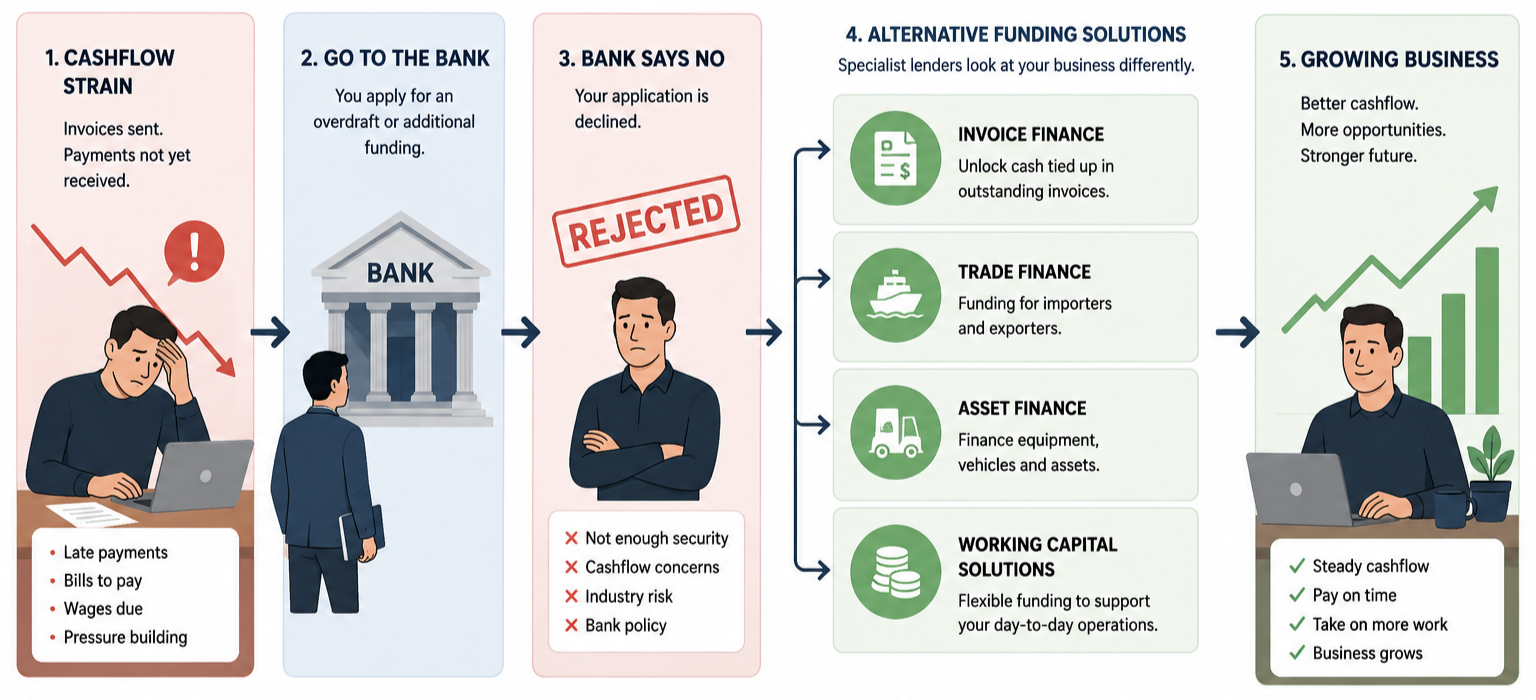
"Why would the bank say no to me, my business is strong?"
It's one of the most frustrating conversations a business owner can have. You've got customers paying in 30, 60 or even 90 days.
Staff still need paying. GST is due. Suppliers want their money. You’ve come to the bank asking for Working Capital support/cashflow support and they turn around and say, "Unfortunately, we're unable to approve your overdraft application."
For many business owners I speak with, that's generally what’s happened and they’re looking for an alternative way to fund that strain.
Why would a profitable business be declined?
This surprises a lot of people, but banks don't just look at whether your business is profitable.
They also look at risk, security available encase you default on the loan and forecasted cashflow or income for the next year to make sure you can afford to pay back the debt.
Some of the more common reasons we just listed include:
1. Not enough security
For many small and medium-sized businesses, banks still like to see personal property security. If there's not enough equity available, the application may be declined even if the business itself is performing well.
That doesn't mean you're a bad business, it simply means the bank isn't comfortable with the level of risk because they can’t guarantee they will get their money back if you default on the loan and they have to sell your house.
2. Cashflow is under pressure
Ironically, businesses often apply for an overdraft because cashflow is already tight. From the bank's perspective, that's exactly what increases their risk.
Late tax payments, stretched creditors or increasing debtors can all influence the decision. If you provide a forward cashflow with future work, and the current debt you are repaying or creditors you are repaying already take up most of your margin then they won’t want to put even more strain on that cycle.
3. The business has grown too quickly
Growth sounds positive. But rapid growth usually means:
More wages
More stock
Larger debtor balances
More working capital required
A business can be winning new customers while simultaneously running out of cash because payment terms are getting longer, inventory is building up, staff payroll has increased dramatically.
4. Your industry
Some industries are simply viewed as higher risk than others.
Construction.
Transport.
Importers.
Exporters.
Seasonal businesses.
That doesn't automatically mean you'll be declined, but it can make obtaining bank funding more difficult.
A declined overdraft doesn't always mean the business is unhealthy
This is probably the biggest misconception I see, banks have one lending model. Specialist lenders have another.
Invoice finance, for example, focuses far more heavily on the quality of your debtor book than the equity in your house.
If you've got good customers paying invoices every month, those invoices can often become the security and the equity in your house can remain untouched.
What should you do next?
Don't panic though and don't sign the first offer that lands in your inbox either.
I’ve seen businesses take expensive short-term unsecured debt simply because they thought they had no other options. Then the repayments kick in on an already tight cashflow and that can lead to a really tough period for those businesses.
Before making a decision, ask yourself:
Why did the bank decline me?
Is it security?
Is it cashflow?
Is it my industry?
Is there another type of finance that's actually better suited to my business?
Sometimes an overdraft is the right answer. Sometimes it isn't.
What are the alternatives?
Depending on your business, options can include:
Invoice Finance (funding your invoices up to 80%)
Purchase Order Finance (funding Purchased Orders if there is clear buy out of goods)
Asset Finance (releasing cash from your secondhand assets and machines)
Each solves a different problem. The key is understanding which one matches your business rather than trying to force everything into an overdraft.
If you want a quick idea of what this could look like for your business, I’m happy to run through it with you.
Or learn more: